Rwanda is one of the most compelling wildlife destinations in Africa, despite its small size. The country rises from rolling savannah plains in the east to mist-covered volcanic mountains along the northern border. Within just a few hours of travel, the landscape shifts from open wildlife savannah to dense rainforest where chimpanzees move through the canopy and mountain gorillas roam bamboo slopes.
Most travellers arrive in Rwanda with one goal: to see mountain gorillas. The experience takes place in Volcanoes National Park, where visitors trek through montane forest in search of habituated gorilla families. Encounters are intimate, controlled, and deeply memorable.
Yet Rwanda offers far more than a single wildlife encounter. The country protects three remarkable national parks that represent completely different ecosystems: the volcano forests of the Virunga Mountains, the ancient rainforest of Nyungwe, and the savannah wilderness of Akagera.
Because Rwanda is compact and well connected by good roads, these experiences can be combined within a relatively short itinerary. Many travellers spend four to six days exploring the country, moving easily between forests, lakes, and wildlife plains.
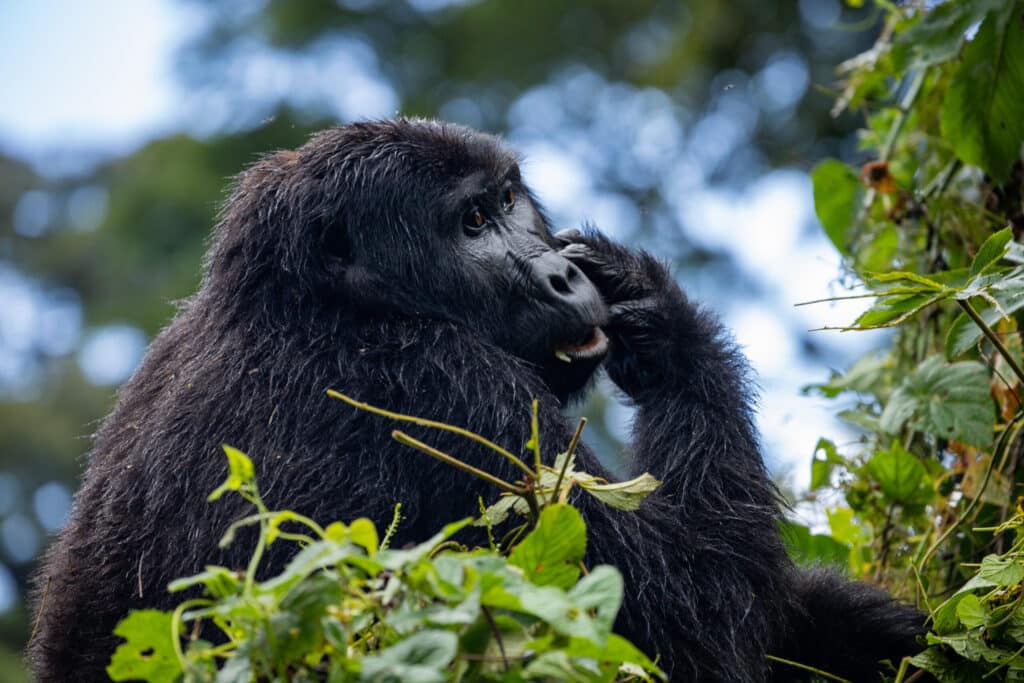
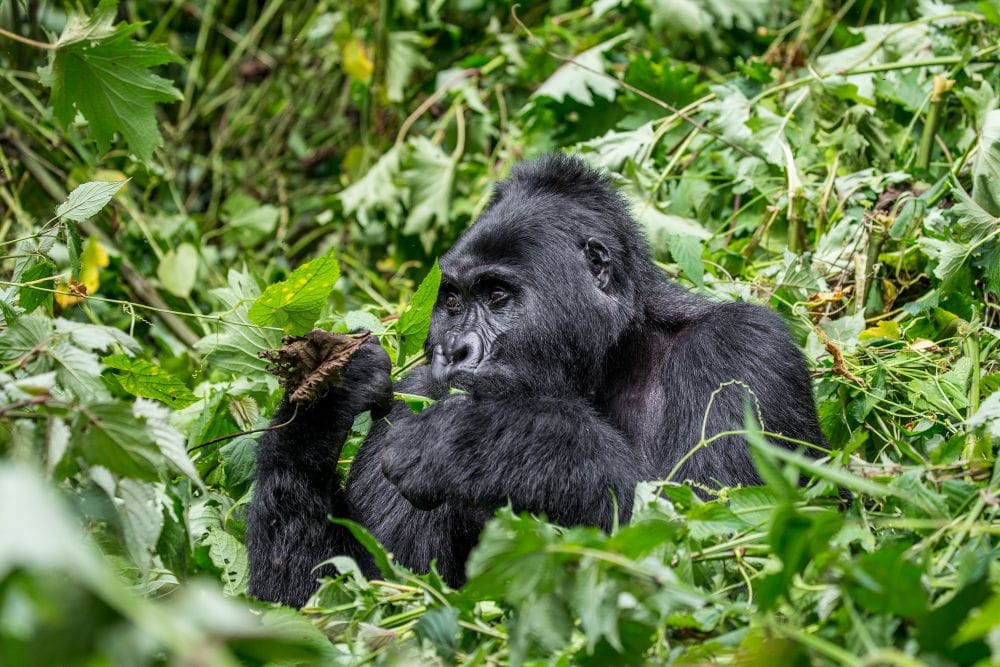
Gorilla trekking is the defining wildlife experience in Rwanda and the main reason travellers visit the country.
The activity takes place in Volcanoes National Park, part of the Virunga Mountain range that spans Rwanda, Uganda, and the Democratic Republic of Congo. This mountainous rainforest protects several habituated gorilla families that can be visited by tourists.
Each morning small groups of visitors are assigned to a specific gorilla family and guided into the forest by experienced rangers. Treks vary in difficulty depending on where the gorillas moved during the night. Some hikes take an hour, while others require several hours of trekking through bamboo forest and steep volcanic slopes.
Once the gorillas are located, visitors spend one hour observing the family — watching the silverback maintain order, juveniles play, and mothers care for their young.
Rwanda limits gorilla tourism carefully. Only eight visitors per gorilla group are allowed each day, ensuring minimal disturbance to the animals.
A gorilla trekking permit in Rwanda costs $1,500 per person, making it the most premium gorilla trekking destination in Africa.
The higher cost reflects Rwanda’s conservation model, which focuses on fewer visitors, higher tourism revenue, and strong community investment around the park.
Volcanoes National Park also offers golden monkey tracking, a lesser-known but highly enjoyable primate experience.
Golden monkeys are a rare species found only in the Virunga Mountains. They live in large, energetic groups and move rapidly through the bamboo forest, often descending to the ground while feeding.
Tracking these monkeys requires shorter hikes than gorilla trekking and provides excellent photography opportunities because the animals are active and visible for longer periods.
Many travellers combine golden monkey tracking with gorilla trekking as part of a two-day primate experience in Volcanoes National Park.
Chimpanzee tracking in Rwanda takes place primarily in Nyungwe Forest National Park, one of the oldest rainforests in Africa.
The forest canopy here echoes with the calls of chimpanzees moving between trees. Tracking usually begins early in the morning as rangers locate chimpanzee groups before visitors enter the forest.
Chimpanzees behave very differently from gorillas. They are fast, vocal, and constantly moving through the canopy. Watching them requires patience and alertness as the group travels through dense forest.
Nyungwe also hosts several other primate species, making it one of the most biologically rich forests in Central Africa.
While Rwanda is best known for primates, the country also offers classic African wildlife safaris.
These take place in Akagera National Park, a savannah landscape of rolling plains, lakes, and acacia woodland along the Tanzanian border.
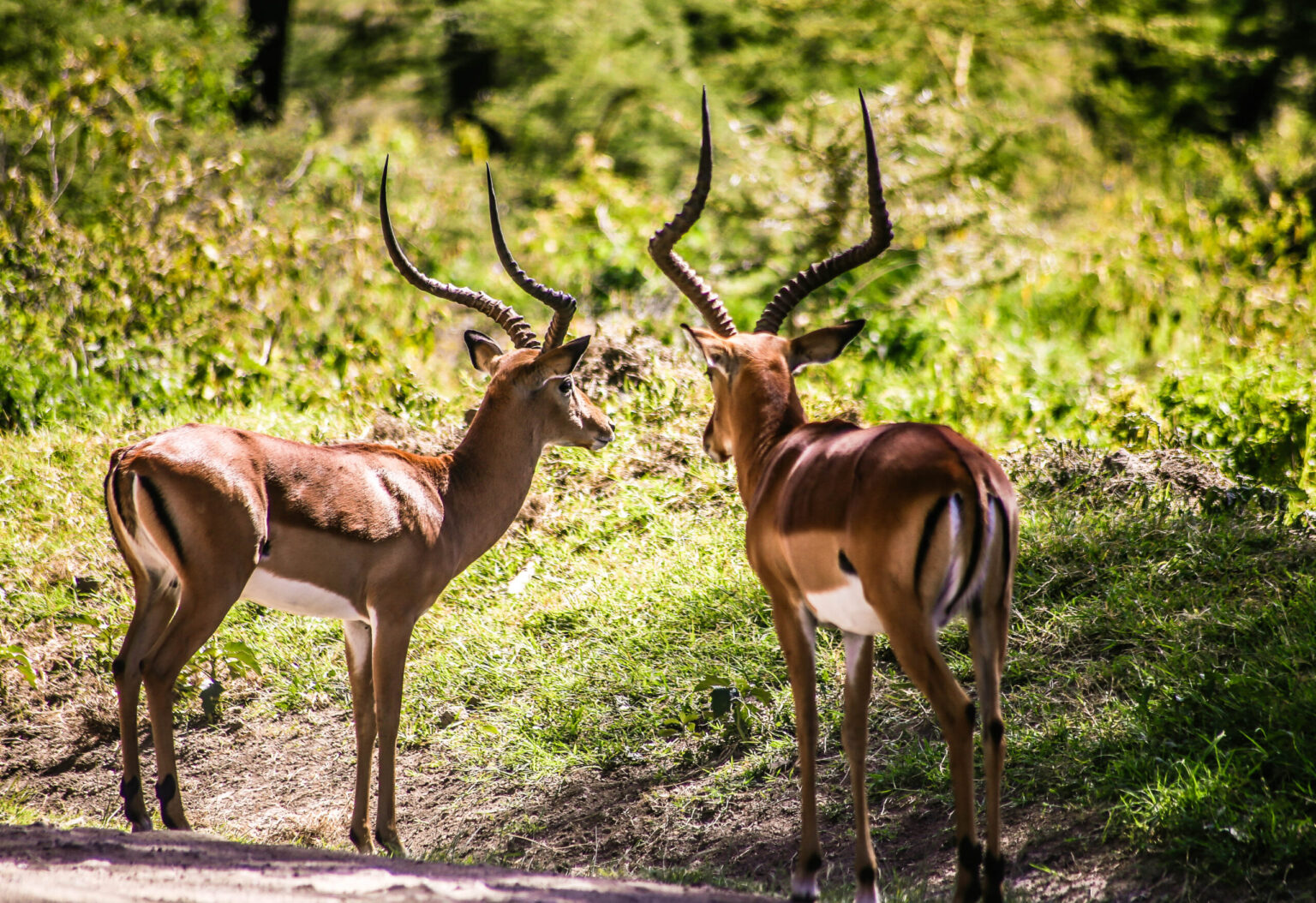
Game drives reveal populations of:
lions
elephants
giraffes
buffalo
zebras
antelope
After extensive conservation work and wildlife reintroductions, Akagera once again supports the Big Five, including both lions and black rhinos.
Because the park receives far fewer visitors than many East African safari destinations, game drives often feel quiet and uncrowded.
Volcanoes National Park is the heart of Rwanda’s wildlife tourism.
The park protects part of the Virunga Mountains, a chain of dormant volcanoes that form one of Africa’s most dramatic landscapes. Bamboo forest covers the lower slopes, giving way to misty montane forest higher up the mountains.
Volcanoes is internationally famous as one of the last refuges of the endangered mountain gorilla.
Nearly all travellers visiting Rwanda come here to experience gorilla trekking. The park headquarters at Kinigi serves as the starting point for daily treks into the forest.
One of the reasons Rwanda has become so popular for gorilla tourism is accessibility. Volcanoes National Park is located only about 2.5 to 3 hours by road from Kigali, allowing even short itineraries to include gorilla trekking.
Luxury lodges around the park have also elevated Rwanda’s reputation as a high-end primate safari destination.
Nyungwe protects one of the largest remaining montane rainforests in Africa.
The forest spreads across steep ridges and deep valleys along Rwanda’s southwestern border and contains an exceptional diversity of wildlife.
Nyungwe is particularly famous for primates, with more than a dozen primate species including chimpanzees, colobus monkeys, and L’Hoest’s monkeys.
The park also supports hundreds of bird species and countless endemic plants, making it one of the most important conservation areas in Central Africa.
Beyond wildlife, Nyungwe is known for its hiking trails, waterfalls, and canopy walk that stretches above the forest.
Akagera National Park protects Rwanda’s only savannah ecosystem.
Located along the eastern border with Tanzania, the park combines open grassland, wetlands, and lakes that attract large numbers of animals and birds.
For many years Akagera suffered from wildlife loss and habitat pressure, but conservation partnerships and wildlife reintroductions have transformed the park.
Today visitors can see lions, elephants, giraffes, buffalo, and rhinos across the savannah plains.
Boat safaris on Lake Ihema add another dimension to the experience, offering close views of hippos, crocodiles, and water birds along the shoreline.
Akagera provides the traditional safari element that complements Rwanda’s forest experiences.
| Country | Park | Jan | Feb | Mar | Apr | May | Jun | Jul | Aug | Sep | Oct | Nov | Dec |
|---|---|---|---|---|---|---|---|---|---|---|---|---|---|
|
Rwanda
|
Volcanoes National Park | ||||||||||||
| Nyungwe National Park | |||||||||||||
| Akagera National Park | |||||||||||||
| Gishwati-Mukura National Park |
Volcanoes National Park
Nyungwe National Park
Akagera National Park
Gishwati-Mukura National Park
The cost of a gorilla trekking permit in Rwanda is $1,500 per person for international visitors. The permit allows travellers to trek one habituated gorilla family in Volcanoes National Park and spend one hour observing the gorillas once they are located.
The permit fee contributes directly to conservation efforts, including anti‑poaching patrols, veterinary care for the gorillas, and community development programs in areas surrounding the park.
Because the number of permits is limited, travellers are advised to book several months in advance, especially during peak travel seasons between June–September and December–February.
Mountain gorillas in Rwanda are found exclusively in Volcanoes National Park, located in the northwestern part of the country near the borders with Uganda and the Democratic Republic of Congo.
The park forms part of the Virunga Mountains, a chain of volcanic peaks that supports one of the last remaining populations of mountain gorillas in the world.
Rwanda currently has around a dozen habituated gorilla families open to tourism.
Gorilla trekking in Rwanda is strictly regulated to protect the animals.
Only eight visitors are allowed to visit each habituated gorilla family per day, accompanied by professional rangers and guides.
Because Rwanda has roughly twelve habituated families available for tourism, the country issues approximately 96 gorilla permits per day in Volcanoes National Park.
This system keeps encounters intimate while limiting stress on the gorillas.
The minimum age for gorilla trekking in Rwanda is 15 years old.
This rule is enforced by the Rwanda Development Board to ensure visitor safety and to protect the gorillas. Trekking often involves several hours of hiking through steep volcanic forest terrain, which can be physically demanding.
Once a gorilla family is located, visitors are allowed to spend one hour observing them in their natural habitat.
During this time travellers can watch the gorillas feed, groom each other, rest, and interact within the group.
The one‑hour limit is strictly enforced to minimize disturbance and stress to the animals.
Gorilla trekking in Rwanda requires moderate physical fitness. Trekking takes place on the slopes of the Virunga volcanoes, and hiking times can vary depending on the movement of the gorilla families.
Some groups are located within one hour of trekking, while others may require several hours of hiking through forest terrain.
Porters are available at the park headquarters and are highly recommended to help carry bags and assist visitors during steep sections of the trek.
Visitors must maintain a minimum distance of seven meters (about 23 feet) from the gorillas.
This rule helps prevent disease transmission and ensures that the gorillas are not stressed by human presence.
Occasionally gorillas may approach visitors on their own, and when this happens guides instruct guests to remain calm and avoid sudden movements.
Gorilla trekking is possible throughout the year, but the most comfortable months are during Rwanda’s dry seasons:
June to September
December to February
These months usually offer drier hiking trails and clearer conditions in the forest.
The rainy seasons from March to May and October to November can make trekking more challenging, but the landscapes are lush and visitor numbers are lower.
Yes. Volcanoes National Park is located approximately 2.5 to 3 hours by road from Kigali, Rwanda’s capital city.
Because of this short travel distance, some travellers choose to do gorilla trekking as a one‑day trip from Kigali. However, most visitors prefer to stay at least one or two nights near the park to avoid very early departures and to explore additional activities in the area.
Both Rwanda and Uganda offer excellent gorilla trekking experiences, but they appeal to slightly different travel styles.
Rwanda is often preferred by travellers looking for easy access from Kigali, shorter travel times, and high‑end luxury lodges near the park.
Uganda is often chosen by travellers seeking lower permit costs, longer multi‑park safari itineraries, and more remote rainforest trekking environments.
The gorilla experience itself is equally remarkable in both countries, as the animals belong to the same mountain gorilla population that inhabits the Virunga ecosystem.