Kenya is where the modern African safari began. Vast savannah plains stretch toward distant hills, acacia trees break the horizon, and wildlife moves freely across landscapes that have defined the image of Africa for generations.
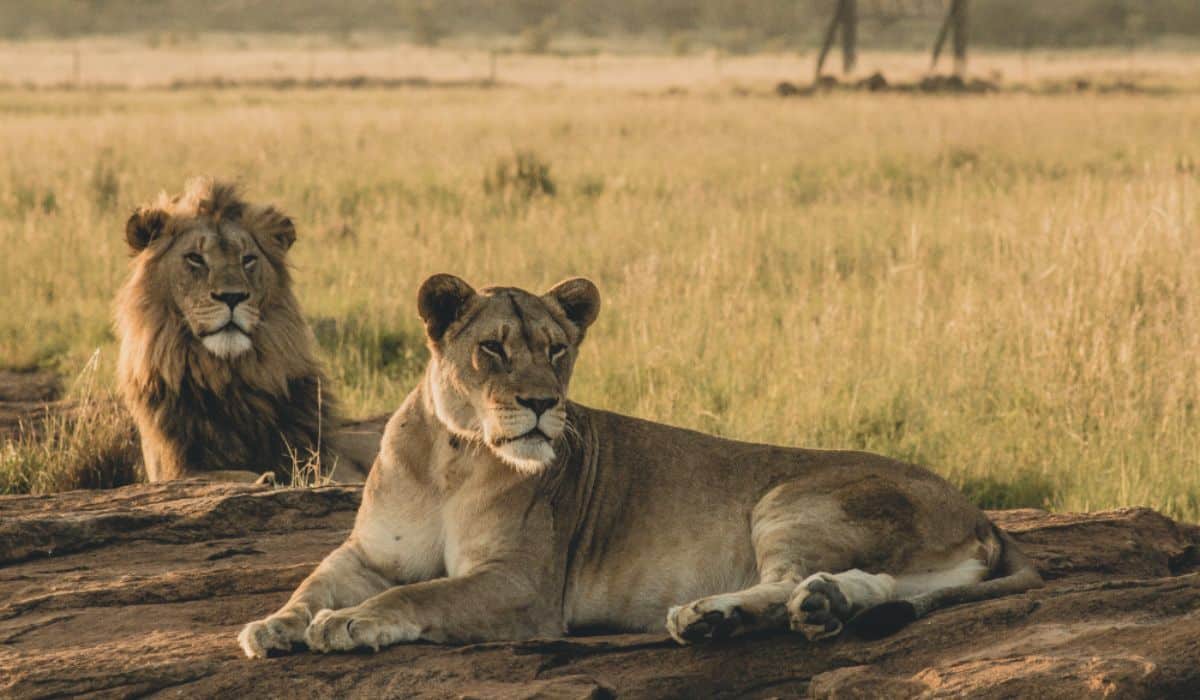
This is one of the best places in the world to see large mammals in the wild. Lions rest beneath acacia trees, elephants move in family herds across open grasslands, and giraffes browse quietly above the savannah.
Kenya’s greatest wildlife spectacle is the Great Migration, when millions of wildebeest and zebra move through the Maasai Mara ecosystem in search of fresh grazing. River crossings, predator encounters, and endless herds moving across the plains make this one of the most dramatic wildlife events on the planet.
Beyond the Mara, Kenya offers an extraordinary diversity of safari environments. Elephant herds roam beneath the snow-capped peak of Mount Kilimanjaro in Amboseli. Rare northern species move through the arid landscapes of Samburu. The vast wilderness of Tsavo stretches across southern Kenya, home to some of the country’s largest elephant populations.
Together these landscapes create one of the most complete safari destinations in Africa.
The Great Migration is Kenya’s most famous wildlife spectacle and one of the greatest natural events on earth.
Each year millions of wildebeest, zebra, and gazelle move between Tanzania’s Serengeti and Kenya’s Maasai Mara following seasonal rains and fresh grass. By mid-year the herds reach the Mara River, where dramatic crossings take place as animals plunge into crocodile-filled waters.
For travellers, witnessing this movement of wildlife across the savannah is unforgettable. Huge herds stretch across the plains while lions, cheetahs, and hyenas follow closely behind.
The migration typically reaches the Maasai Mara between July and October, making this the peak season for Kenya safaris.
Kenya is one of the best destinations in Africa for traditional safari game drives.
Early morning and late afternoon drives across open plains reveal a wide variety of wildlife including:
lions
elephants
buffalo
leopards
giraffes
zebras
antelope species
The Maasai Mara is particularly famous for predator sightings. Large lion prides patrol the plains, cheetahs hunt across open grasslands, and leopards hide in riverine forests.
Because the landscapes are open, wildlife viewing is often excellent and animals can be observed at close range.
Amboseli National Park is one of the most iconic safari locations in Africa.
Here, large elephant herds move across dusty plains beneath the dramatic silhouette of Mount Kilimanjaro, Africa’s highest mountain.
Amboseli’s elephants are some of the most studied in the world, and many families have been observed for decades. Visitors often see large bulls with enormous tusks moving slowly through the savannah.
During clear mornings the view of elephants walking across the plains with Kilimanjaro rising in the background creates one of the most recognisable safari scenes in Africa.
Northern Kenya offers a very different safari environment.
In the arid landscapes of Samburu and the surrounding reserves, travellers encounter wildlife species rarely seen elsewhere in East Africa. These include:
Grevy’s zebra
reticulated giraffe
Beisa oryx
Somali ostrich
gerenuk antelope
The landscape is rugged and dramatic, with dry riverbeds and rocky hills replacing the open savannah of southern Kenya.
Because visitor numbers are lower, safaris here often feel remote and exclusive.
In several conservancies and protected areas, visitors can explore the landscape on foot with experienced guides.
Walking safaris offer a deeper understanding of the environment — tracking animal footprints, learning about plants, and observing smaller wildlife that is often missed from vehicles.
Kenya also provides opportunities to learn about traditional Maasai and Samburu cultures. Visits to local communities reveal pastoral lifestyles that have existed alongside wildlife for centuries.
These cultural encounters add an important human dimension to the safari experience.
The Maasai Mara is Kenya’s most famous safari destination and one of the best wildlife reserves in Africa.
The landscape consists of open grassland dotted with acacia trees, creating ideal habitat for large mammals. Wildlife densities here are among the highest on the continent.
The Mara is especially renowned for its predator populations. Lions, cheetahs, and leopards are frequently seen during game drives, often following the huge herds of wildebeest and zebra that move through the ecosystem.
Between July and October the Great Migration transforms the plains into a dramatic stage of wildlife movement and predator action.
For many travellers, the Maasai Mara represents the classic African safari experience.
Amboseli is known for its large elephant populations and spectacular views of Mount Kilimanjaro.
The park’s wetlands attract wildlife year-round, creating reliable viewing conditions even during dry periods.
Elephants dominate the landscape here, often moving in large family groups across the open plains. Buffalo, lions, and numerous antelope species also inhabit the park.
Photographers are particularly drawn to Amboseli because of its dramatic scenery and iconic elephant silhouettes against the Kilimanjaro backdrop.
Samburu lies in northern Kenya along the banks of the Ewaso Nyiro River.
The landscape is rugged and semi-arid, creating a safari environment that feels very different from the greener southern parks.
Samburu is famous for its unique wildlife species known as the “Samburu Special Five”:
Grevy’s zebra
reticulated giraffe
gerenuk
Beisa oryx
Somali ostrich
Large elephant herds also gather along the river, especially during dry months.
Because the reserve receives fewer visitors than the Maasai Mara, safaris here feel quieter and more intimate.
Tsavo East is one of the largest protected wilderness areas in Kenya.
The landscape is characterised by red soil plains, scattered baobab trees, and wide open savannah stretching toward the horizon.
The park is famous for its red elephants, which often appear coated in the park’s distinctive iron-rich soil.
Large herds of elephants, buffalo, giraffes, and antelope roam the plains, while lions and leopards move through the bush.
Because of its sheer size, Tsavo East offers a sense of scale and wilderness that is increasingly rare in modern safari destinations.
Tsavo West lies adjacent to Tsavo East but offers a more varied landscape.
Volcanic hills, lava flows, and lush springs create a dramatic contrast to the open plains of Tsavo East.
One of the park’s highlights is Mzima Springs, where crystal-clear water flows from underground rivers and attracts hippos and crocodiles.
Wildlife viewing includes elephants, buffalo, giraffes, and predators, while the scenery adds a striking geological dimension to the safari experience.
| Country | Park | Jan | Feb | Mar | Apr | May | Jun | Jul | Aug | Sep | Oct | Nov | Dec |
|---|---|---|---|---|---|---|---|---|---|---|---|---|---|
|
Kenya
|
Maasai Mara National Reserve | ||||||||||||
| Amboseli National Park | |||||||||||||
| Samburu National Reserve | |||||||||||||
| Tsavo East National Park | |||||||||||||
| Tsavo West National Park |
Maasai Mara National Reserve
Amboseli National Park
Samburu National Reserve
Tsavo East National Park
Tsavo West National Park
Kenya is a year-round safari destination, but the most popular time to visit is during the dry seasons when wildlife is easier to spot.
The main dry seasons are:
June to October
January to March
During these months, vegetation is thinner and animals tend to gather around water sources, making game viewing easier.
The period between July and October is particularly famous because it coincides with the Great Migration in the Maasai Mara, when hundreds of thousands of wildebeest and zebra cross from Tanzania into Kenya.
The rainy seasons, from March to May and again in November, bring lush landscapes and fewer tourists, though some roads in remote parks may become muddy.
Kenya is one of the best countries in Africa for wildlife viewing and is home to a remarkable diversity of animals.
Visitors can often see the Big Five:
Lion
Leopard
Elephant
Buffalo
Rhinoceros
Other commonly seen wildlife includes giraffes, cheetahs, zebras, wildebeest, hyenas, hippos, crocodiles, and numerous antelope species.
Kenya also has more than 1,100 recorded bird species, making it an exceptional destination for birdwatching.
The Great Migration is one of the largest wildlife movements on Earth, involving more than 1.5 million wildebeest along with hundreds of thousands of zebras and gazelles.
The animals migrate in a circular pattern between Tanzania’s Serengeti National Park and Kenya’s Maasai Mara in search of fresh grazing.
The most dramatic phase of the migration usually occurs between July and October, when large herds cross the Mara River while predators wait nearby.
This spectacle is widely considered one of the greatest wildlife experiences in Africa.
Most travellers spend between five and ten days on safari in Kenya.
A typical itinerary often includes:
Maasai Mara National Reserve for classic savannah wildlife
Amboseli National Park for elephant herds and views of Mount Kilimanjaro
Lake Nakuru or Lake Naivasha for birdlife and rhinos
Shorter safaris of three to four days are also possible, particularly if focusing on the Maasai Mara alone.
Kenya is generally considered safe for tourism, especially within established safari regions and national parks.
The safari industry is well developed, and lodges and tour operators follow strict safety protocols for guests.
As with travel in any country, visitors are advised to follow basic precautions such as avoiding isolated areas at night in major cities and following guidance from local guides during wildlife activities.
Most travellers visiting Kenya must obtain an Electronic Travel Authorisation (eTA) before arrival.
Applications are completed online through the official Kenyan government website prior to travel. Once approved, the eTA allows visitors to enter Kenya for tourism purposes.
Passport validity of at least six months from the date of entry is typically required.
Travellers should always check the latest entry requirements before departure as regulations may change.
The official currency in Kenya is the Kenyan Shilling (KES).
Major hotels, safari lodges, and tour operators usually accept international credit cards and US dollars. However, smaller shops and markets often require local currency.
ATMs are widely available in major cities such as Nairobi and Mombasa, though access may be limited in remote safari areas.
Kenya offers a wide range of safari experiences beyond traditional game drives.
These include:
Guided walking safaris
Hot air balloon safaris over the Maasai Mara
Cultural visits to Maasai communities
Boat safaris on Lake Naivasha
Camel safaris in northern Kenya
These activities allow travellers to experience Kenya’s landscapes and wildlife from different perspectives.
Safari packing should focus on comfort and practicality.
Recommended items include:
Lightweight neutral-colored clothing
A wide-brimmed hat
Sunglasses and sunscreen
Comfortable walking shoes
A good camera or binoculars
Evenings and early mornings can be cool, particularly in highland regions, so a light jacket or fleece is also recommended.
Yes. Kenya is one of the few safari destinations where wildlife experiences can easily be combined with beach holidays.
After a safari in parks such as the Maasai Mara or Amboseli, many travellers continue to the Indian Ocean coast.
Popular beach destinations include:
Diani Beach
Watamu
Malindi
These coastal areas offer white-sand beaches, coral reefs, marine parks, and luxury resorts, making them a perfect complement to a wildlife safari.